
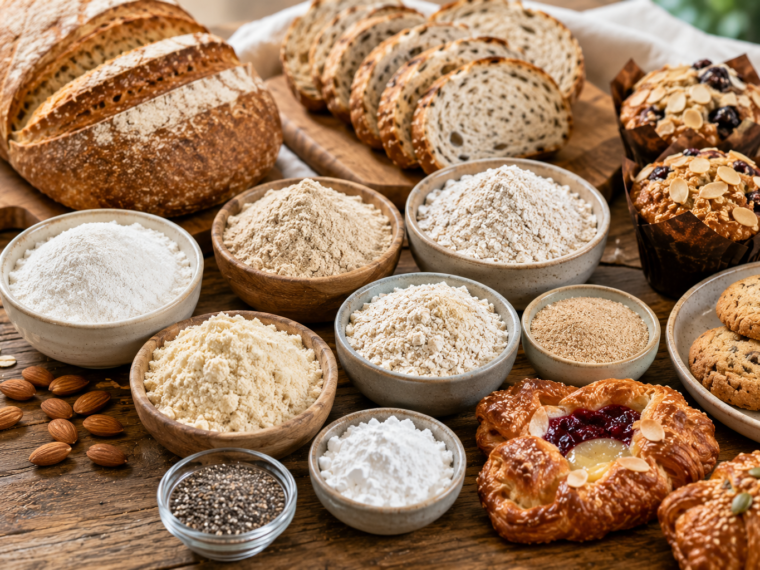
Gluten-free baking has evolved dramatically over the past decade. What was once considered a niche category has become a major part of the modern bakery industry. Today, gluten-free breads, pastries, cakes, and cookies can be found in bakeries, cafés, and home kitchens across the United States. As consumer interest continues to grow, bakers are discovering new ingredients and techniques that make gluten-free products more flavorful, nutritious, and enjoyable than ever before.
For many years, gluten-free baking was associated with dry textures and limited options. Modern ingredient innovations have changed that perception. Bakers now have access to a wide range of alternative flours, starches, and binding agents that help create products with excellent texture, structure, and taste. As a result, gluten-free baking is no longer simply about replacing wheat flour—it has become a creative craft in its own right.
One of the most important developments has been the growing variety of gluten-free flours available to bakers. Rice flour remains one of the most commonly used options because of its neutral flavor and versatility. Almond flour has gained popularity thanks to its rich taste and moist texture, making it particularly suitable for cakes and pastries. Oat flour, when certified gluten-free, offers a mild flavor and soft crumb. Other alternatives such as sorghum flour, millet flour, buckwheat flour, and coconut flour each bring unique characteristics that allow bakers to create more complex and interesting recipes.
Starches play a critical role in gluten-free baking as well. Since gluten normally provides structure and elasticity, bakers often use ingredients such as tapioca starch, potato starch, and cornstarch to improve texture. These ingredients help create lighter products while contributing to moisture retention and overall consistency. Carefully balancing flour and starch combinations is often the key to successful gluten-free recipes.
Another major innovation involves binding agents. Without gluten, doughs and batters can become fragile or crumbly. Ingredients such as xanthan gum, guar gum, psyllium husk, and chia seeds help mimic some of gluten’s structural properties. Psyllium husk, in particular, has become a favorite among artisan gluten-free bakers because it can create breads with improved elasticity and a more traditional texture.
Consumer preferences are also shaping ingredient choices. Many people seek gluten-free products made with recognizable, minimally processed ingredients. This trend has encouraged bakers to experiment with natural alternatives while focusing on flavor and nutritional value. Ancient grains, seed-based flours, and nutrient-rich ingredients are becoming increasingly common in modern gluten-free recipes.
Beyond health considerations, gluten-free baking has become a source of culinary creativity. Bakers are discovering unique flavor profiles that would be difficult to achieve using traditional wheat flour alone. Nutty, earthy, and subtly sweet characteristics from alternative ingredients create opportunities for innovation and product differentiation.
The rise of artisan baking has further elevated gluten-free products. Consumers increasingly expect gluten-free breads and pastries to match the quality of their traditional counterparts. This expectation has pushed bakers to refine techniques, improve recipes, and invest in premium ingredients that deliver exceptional results.
Gluten-free baking is no longer defined by limitations. Instead, it represents an exciting area of growth where creativity, innovation, and ingredient knowledge come together. Whether you’re a professional baker or a home enthusiast, exploring modern gluten-free ingredients can open the door to new flavors, textures, and baking possibilities that continue to shape the future of the industry.