
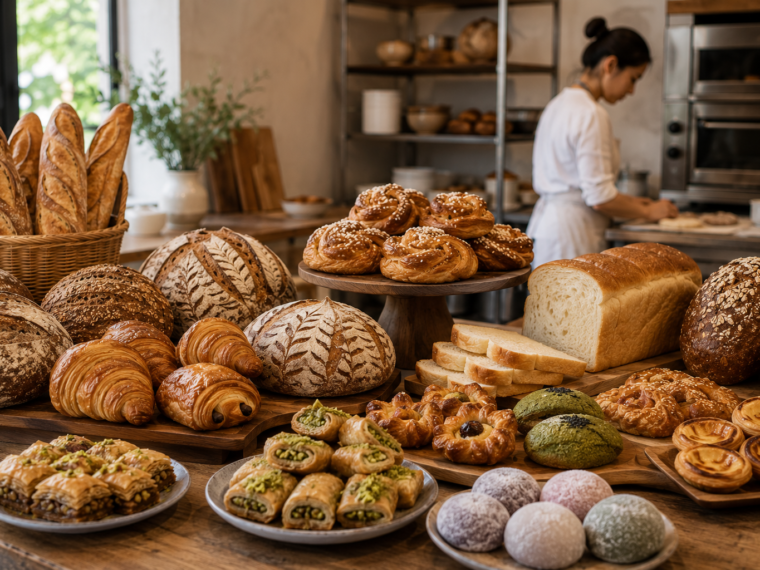
The world of baking has never been more connected. A pastry inspired by France may be reimagined in South Korea, while traditional Japanese flavors find their way into artisan bakeries in New York or Los Angeles. Today’s baking scene is a fascinating blend of cultures, techniques, and ingredients that continue to shape one another in exciting ways.
One of the biggest trends in modern baking is the fusion of traditional recipes with international flavors. Bakers are increasingly exploring ingredients from different parts of the world to create something familiar yet unique. Matcha, yuzu, black sesame, dulce de leche, pistachio cream, and ube have all become popular additions to breads, cakes, and pastries far beyond their countries of origin. These ingredients introduce new tastes while preserving the techniques that make classic baked goods so beloved.
French baking traditions continue to influence bakeries worldwide, but they are no longer the only source of inspiration. Japanese bakeries have gained international recognition for their soft milk bread, delicate pastries, and attention to detail. Scandinavian baking has brought renewed interest in cardamom buns and naturally fermented breads. Meanwhile, Middle Eastern flavors such as dates, tahini, rose water, and pistachios are appearing in modern pastry menus across the United States. Rather than replacing local traditions, these influences enrich them and encourage creativity.
Social media has played a major role in accelerating these exchanges. Bakers can now discover techniques, ingredients, and trends from across the globe within seconds. A bakery in California may take inspiration from a pastry shop in Copenhagen, while a baker in London experiments with recipes inspired by Seoul or Mexico City. This constant flow of ideas has helped create a more diverse and innovative baking community than ever before.
Consumers are also driving change. Many bakery customers actively seek new experiences and flavors while still appreciating authentic craftsmanship. As a result, bakeries are finding ways to balance tradition and innovation. A classic croissant might feature a seasonal Asian-inspired filling, or a traditional sourdough loaf could incorporate grains and spices from different regions. These creative combinations allow bakers to tell stories through food and connect people through shared culinary experiences.
For home bakers, global baking trends provide endless inspiration. Access to international recipes, online classes, and specialty ingredients has made it easier than ever to experiment in the kitchen. Trying a new bread style or pastry from another culture can deepen baking skills while offering a greater appreciation for traditions from around the world.
The future of baking is likely to become even more interconnected. As cultures continue to share techniques, ingredients, and ideas, bakeries will remain places where tradition meets innovation. Whether it’s a French-inspired pastry with Japanese flavors or a Scandinavian-style loaf baked in an American kitchen, these cultural exchanges remind us that great baking has the power to bring people together across borders.