
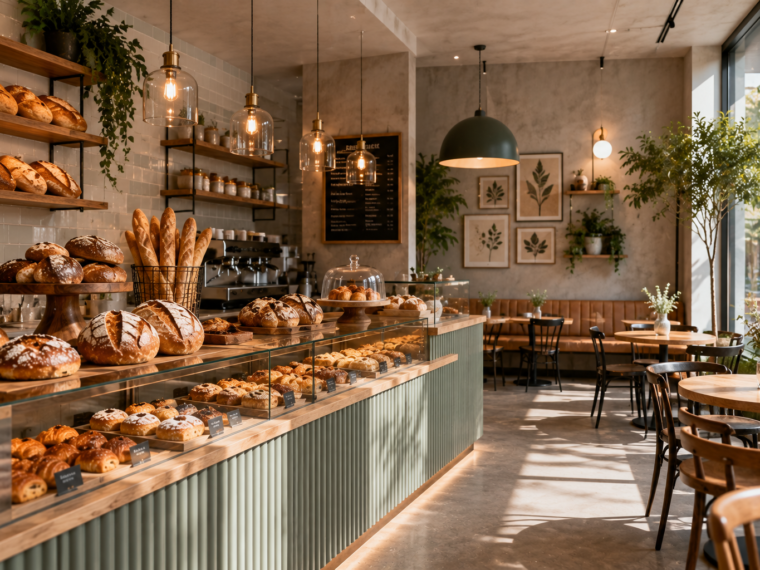
Before customers taste a croissant or buy a loaf of bread, they experience a bakery through their eyes. Colors, textures, lighting, and materials all influence how a space feels and how people interact with it. These design elements may seem subtle, but they play a powerful role in shaping customer perceptions, emotions, and purchasing decisions. In modern bakery design, creating the right atmosphere is almost as important as creating great products.
Color is often the first thing customers notice when entering a bakery. Warm tones such as cream, beige, soft brown, and muted terracotta naturally create feelings of comfort and familiarity. These colors are commonly associated with bread, pastry, and baked goods, making the environment feel inviting and appetizing. Soft earthy palettes can encourage customers to relax, spend more time in the space, and enjoy the overall experience.
Lighter colors are frequently used to make bakeries feel open and welcoming. White walls, natural light, and neutral tones help showcase products while creating a sense of freshness and cleanliness. In modern bakery interiors, these elements often work together to highlight the craftsmanship behind the baked goods. When products become the visual focus, customers are more likely to notice details and appreciate quality.
Materials contribute just as much to the atmosphere. Natural wood remains one of the most popular choices in bakery design because it creates warmth and authenticity. Wooden counters, shelves, and tables reinforce the idea of handcrafted products and traditional baking methods. Customers often associate natural materials with quality, care, and artisanal craftsmanship.
Stone, marble, and concrete introduce a different aesthetic. These materials can create a clean, contemporary look while maintaining an elegant feel. Many modern bakeries combine natural wood with stone surfaces to balance warmth and sophistication. This combination appeals to customers seeking both comfort and premium experiences.
Texture is another important factor that is often overlooked. Rough wooden surfaces, woven fabrics, ceramic displays, and handcrafted décor add visual depth and personality. These details help create spaces that feel genuine rather than overly commercial. Customers are increasingly drawn to environments that feel authentic and thoughtfully designed.
Lighting ties everything together. Natural daylight remains one of the most effective tools in bakery design because it enhances the appearance of breads, pastries, and desserts. Warm artificial lighting can further highlight textures, golden crusts, and decorative details. Well-designed lighting makes products look more appealing while contributing to a relaxed and enjoyable atmosphere.
Colors and materials also influence brand identity. A bakery with light wood, greenery, and soft neutral tones may communicate freshness and sustainability. A bakery using darker colors, brass accents, and dramatic lighting may project luxury and sophistication. Every design choice tells a story and helps customers understand what the bakery represents before they even make a purchase.
Social media has increased the importance of these visual elements. Beautiful interiors often encourage customers to take photos and share their experiences online. Carefully selected colors, attractive displays, and aesthetically pleasing materials can extend a bakery’s visibility far beyond its physical location.
Ultimately, successful bakery design is about creating harmony between products and environment. Colors influence emotions, materials create atmosphere, and thoughtful design enhances every interaction. When these elements work together, they transform a simple bakery visit into a memorable experience that customers want to repeat. In today’s bakery industry, great design is not simply decoration—it is an essential part of the customer journey.