
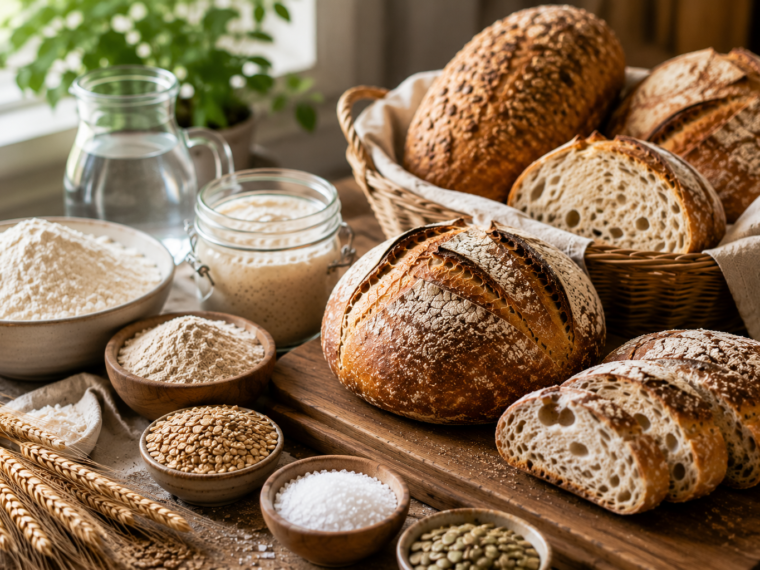
Great bread may seem simple at first glance. Flour, water, yeast, and salt are often all that is needed to create a loaf. Yet anyone who has tasted an exceptional artisan bread knows that the quality of the ingredients can transform something basic into something remarkable. Behind every flavorful crust and airy crumb lies a careful selection of ingredients that work together to create texture, aroma, and character.
Flour is often considered the foundation of great bread. Different varieties bring distinct qualities to the final loaf. Bread flour, with its higher protein content, helps develop strong gluten networks that create structure and chewiness. Whole grain flours contribute depth of flavor and nutritional value, while specialty flours such as rye, spelt, or einkorn introduce unique textures and subtle taste variations. The quality of the grain itself also matters. Freshly milled flour often provides richer flavors and more complex aromas than highly processed alternatives.
Water may appear insignificant, but it plays a critical role in bread making. Water activates gluten development, supports fermentation, and influences the final texture of the dough. Many artisan bakers pay close attention to water quality because minerals and composition can affect fermentation and flavor. Even small differences can influence the character of a loaf. Clean, balanced water allows other ingredients to perform at their best while contributing to overall consistency.
Fermentation is where bread begins to develop its personality. Yeast remains one of the most important ingredients in baking, helping dough rise while creating flavor compounds. However, many bakers believe that sourdough cultures offer something truly special. Natural fermentation develops complex flavors, subtle acidity, and improved texture through a slower process. The longer fermentation times often result in breads with deeper aromas and greater complexity compared to quickly produced loaves.
Salt is another ingredient that deserves more attention than it often receives. Beyond enhancing flavor, salt strengthens gluten structure and helps regulate fermentation. A well-balanced amount of salt brings harmony to the entire loaf, highlighting natural grain flavors while improving texture and crust development. Without it, even the finest ingredients can taste incomplete.
Modern bakers are also exploring ingredients that elevate bread beyond tradition. Seeds, grains, nuts, dried fruits, and natural sweeteners add texture, flavor, and visual appeal. Pumpkin seeds, sunflower seeds, flaxseed, oats, walnuts, raisins, and honey can transform a simple loaf into a memorable experience. These additions provide variety while allowing bakers to create distinctive products that reflect personal style and regional influences.
The growing interest in sustainable sourcing has also influenced bread making. Consumers increasingly appreciate bread made from locally grown grains, responsibly produced ingredients, and heritage wheat varieties. These choices not only support local agriculture but often contribute unique flavors that cannot be replicated through mass-produced ingredients.
Temperature, technique, and time remain important factors, but exceptional bread begins with exceptional ingredients. Bakers who invest in quality flour, carefully selected fermentation cultures, premium salt, and thoughtfully sourced additions often produce loaves that stand apart from the ordinary.
For home bakers, understanding ingredients is one of the most rewarding parts of the craft. Experimenting with different flours, fermentation methods, and flavor additions can reveal how small changes create dramatic differences in the final product. Great bread is not the result of complexity—it is the result of choosing the right ingredients and allowing them to shine.