
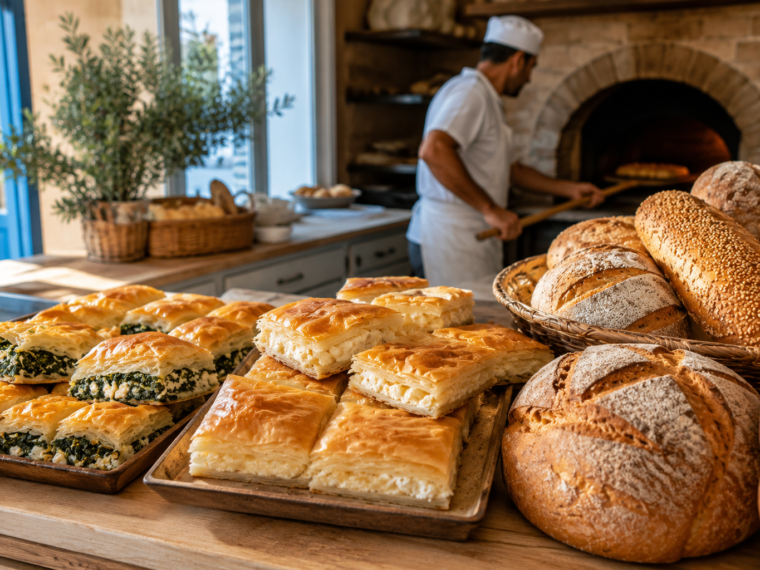
Step into a Greek bakery, and you are immediately greeted by the aroma of freshly baked bread, buttery pastry layers, and time-honored recipes. These bakeries are more than places to buy food—they are cultural landmarks where generations of baking traditions continue to thrive. For bakery lovers and home bakers alike, Greek baking offers a fascinating blend of simplicity, craftsmanship, and flavor.
One of the most iconic elements of Greek bakeries is phyllo pastry. Made from paper-thin sheets of dough, phyllo requires patience, precision, and skill. The result is a delicate texture that becomes wonderfully crisp when baked. Greek bakers use phyllo to create a wide variety of pastries, both sweet and savory. Spinach-filled spanakopita and cheese-filled tiropita are among the most recognizable examples. On the sweeter side, layered pastries filled with nuts, honey, and spices showcase how a few carefully chosen ingredients can create remarkable flavor and texture.
Alongside these pastries, traditional breads remain at the heart of Greek baking culture. Bread has long played an important role in everyday life, family meals, and celebrations throughout Greece. Many Greek bakeries produce rustic loaves with crisp crusts and soft interiors, often using recipes that have been refined over decades. Sesame-covered breads, village-style loaves, and holiday breads each reflect different regions and customs. These breads are designed to complement meals while also standing on their own as satisfying staples.
What makes Greek baking especially appealing is its connection to high-quality ingredients. Olive oil, honey, nuts, herbs, and locally sourced grains frequently appear in both pastries and breads. Rather than relying on overly complex recipes, Greek bakers often focus on allowing these ingredients to shine. This philosophy creates baked goods that feel authentic, balanced, and deeply rooted in tradition. The emphasis on freshness and simplicity continues to resonate with modern consumers seeking flavorful foods made with care.
Today, Greek bakeries successfully combine heritage with contemporary tastes. Many bakers preserve traditional recipes while introducing modern presentation styles and creative flavor variations. This approach helps attract new generations of customers without losing the essence of Greek baking. Home bakers have also embraced these traditions, experimenting with phyllo-based recipes and artisan breads in their own kitchens. Thanks to online tutorials, cookbooks, and a growing interest in international baking, Greek-inspired creations are becoming increasingly popular across the United States.
The lasting appeal of Greek bakeries comes from their ability to connect people through food. Every loaf of bread and every flaky pastry tells a story of family, community, and craftsmanship. Whether enjoyed as part of a festive gathering or a simple afternoon snack, these baked goods offer a taste of a culinary tradition that has been cherished for centuries. For anyone who loves baking, Greek pastries and breads provide endless inspiration and a reminder that great baking often begins with simple ingredients and exceptional technique.