
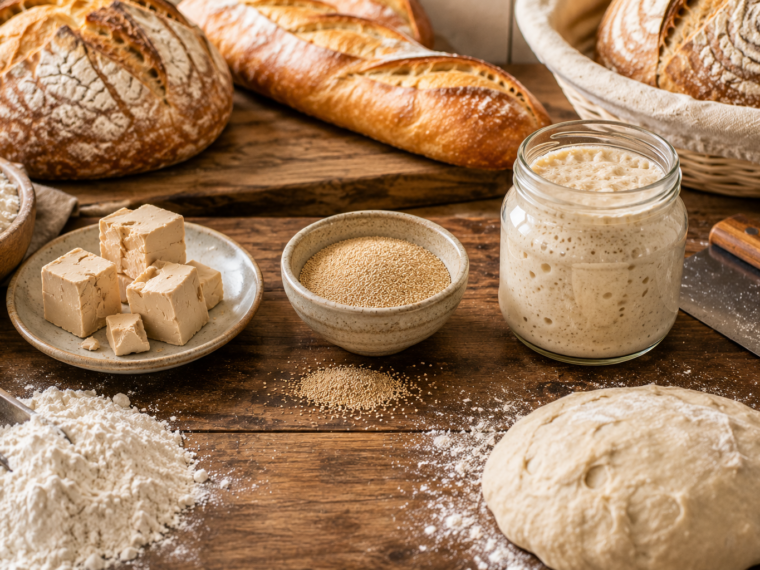
Every great loaf of bread starts with a choice that many bakers face sooner or later: fresh yeast, dry yeast, or sourdough starter. While all three help dough rise, they each bring unique characteristics to the baking process. Understanding their differences can help home bakers and bread enthusiasts choose the option that best fits their goals, schedule, and desired flavor profile.
At first glance, yeast may seem like a simple ingredient. In reality, it plays a major role in determining how bread tastes, smells, and feels. Whether you’re baking a rustic artisan loaf, soft dinner rolls, or a traditional baguette, the type of leavening you choose can significantly influence the final result.
Fresh yeast, sometimes called cake yeast or compressed yeast, is a favorite among many professional bakers. It is sold in a moist, block-like form and contains living yeast cells that are highly active. Fresh yeast often produces a clean fermentation flavor and reliable rise when handled properly. Many bakers appreciate its performance in enriched doughs such as brioche and sweet breads. However, fresh yeast has a relatively short shelf life and must be refrigerated. For home bakers who do not bake frequently, this can make storage less convenient.
Dry yeast is the most common choice for home baking. Available as active dry yeast or instant yeast, it offers excellent convenience and a much longer shelf life than fresh yeast. Instant yeast can be mixed directly into flour, while active dry yeast often benefits from being dissolved in warm water before use. Dry yeast is reliable, easy to store, and widely available. It performs well in a broad range of recipes, making it an ideal option for beginners and experienced bakers alike. For those looking for consistency and simplicity, dry yeast remains one of the most practical choices.
Sourdough starter represents a completely different approach. Instead of relying on commercial yeast, sourdough uses a natural culture of wild yeast and beneficial bacteria. This fermentation process creates complex flavors, subtle acidity, and unique textures that many bread lovers find irresistible. Sourdough baking requires more patience and attention than working with commercial yeast, but many bakers consider the extra effort worthwhile. Each starter develops its own personality over time, producing bread with character and depth that cannot easily be replicated.
The choice between these options often depends on your priorities. If you want convenience and dependable results, dry yeast is difficult to beat. If you enjoy traditional baking methods and have access to fresh ingredients, fresh yeast can provide excellent performance. If flavor development and artisan craftsmanship are your main goals, sourdough offers an incredibly rewarding experience.
Time is another important factor. Dry yeast typically provides the fastest and most predictable fermentation. Fresh yeast behaves similarly but requires proper storage and handling. Sourdough fermentation usually takes longer, often requiring several hours or even overnight proofing. The extended fermentation contributes to its distinctive flavor but requires greater planning.
Many bakers eventually experiment with all three methods. Each teaches valuable lessons about fermentation, dough development, and flavor creation. Rather than viewing them as competitors, it is helpful to see them as different tools suited to different baking projects.
Ultimately, there is no single correct answer. Fresh yeast, dry yeast, and sourdough each offer unique advantages. The best choice depends on your baking style, available time, and personal preferences. By understanding how each option works, you can confidently select the right leavening method and enjoy the process of creating exceptional bread at home.