
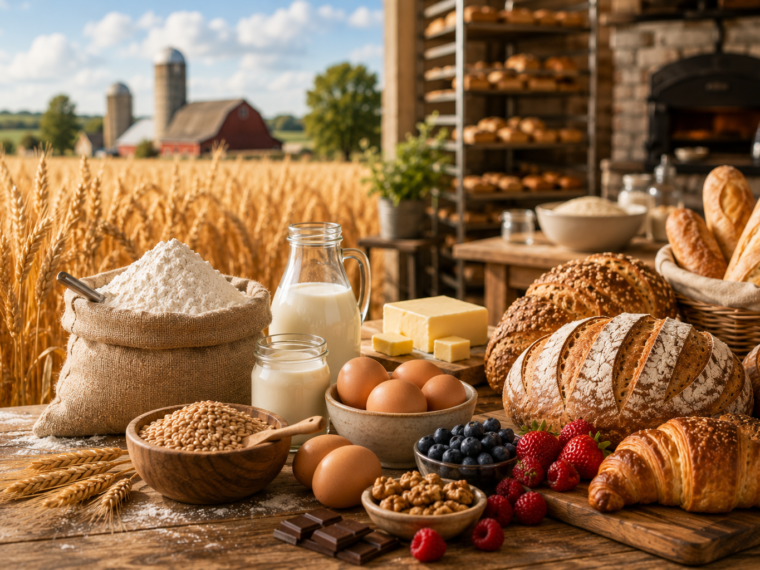
Every loaf of bread, buttery croissant, and beautifully decorated cake begins long before it reaches a bakery display case. Behind every baked product lies a journey that starts on farms, in orchards, and at production facilities where essential ingredients are carefully cultivated and prepared. Understanding this journey helps us appreciate not only the final product but also the many people and processes that make baking possible.
In today’s food culture, consumers are increasingly interested in where their ingredients come from. Bakers, too, are paying closer attention to sourcing, quality, and sustainability. The path from farm to bakery has become an important part of the story behind artisan breads, pastries, and desserts. Every ingredient contributes its own history, character, and influence to the final creation.
Flour is perhaps the most fundamental bakery ingredient. Its journey begins in fields where wheat is grown and harvested. After harvesting, the grain is cleaned, milled, and transformed into flour suitable for baking. Different wheat varieties and milling techniques produce distinct types of flour, each designed for specific applications. Bread flour, pastry flour, and all-purpose flour all originate from carefully selected grains that determine the texture and structure of baked goods. For many artisan bakers, the quality of flour is one of the most important factors in achieving exceptional results.
Dairy products follow a similarly important path. Milk, butter, cream, and other dairy ingredients often come from farms where quality standards directly affect flavor and performance. Butter, in particular, plays a critical role in pastries such as croissants and puff pastry. Its fat content and consistency influence lamination, texture, and overall richness. Bakers often seek reliable suppliers who provide ingredients that perform consistently and enhance flavor.
Sugar begins its journey through sugar cane or sugar beet cultivation. After processing and refining, it becomes one of the most versatile ingredients in baking. Beyond sweetness, sugar contributes moisture retention, browning, structure, and shelf life. Different varieties, including granulated sugar, brown sugar, and specialty sugars, each bring unique characteristics to recipes. Their origins may vary, but their impact on baking is universal.
Fresh fruits, nuts, chocolate, spices, and specialty ingredients add another layer of complexity to the supply chain. Many bakeries prioritize seasonal ingredients, sourcing products when they are at their peak flavor. Local produce can offer freshness and support regional agriculture, while imported ingredients may introduce unique flavors and culinary traditions. Together, they help bakers create products that reflect both creativity and quality.
The rise of artisan baking has increased awareness of ingredient sourcing. Many consumers now value transparency and want to understand how ingredients are grown, processed, and transported. Bakers increasingly share information about their suppliers, highlighting the relationships that help ensure consistent quality. This focus on traceability creates stronger connections between producers, bakers, and customers.
Sustainability has also become an important consideration. Reducing food waste, supporting responsible farming practices, and choosing environmentally conscious suppliers are priorities for many modern bakeries. These efforts help create a more sustainable food system while meeting consumer expectations for ethical sourcing.
From fields of wheat to bags of flour, from dairy farms to pastry kitchens, every ingredient carries a story. The next time you enjoy a fresh loaf of bread or a delicate pastry, it’s worth remembering the journey behind each bite. The path from farm to bakery is a remarkable collaboration between farmers, suppliers, and bakers, all working together to transform simple ingredients into something truly special.