
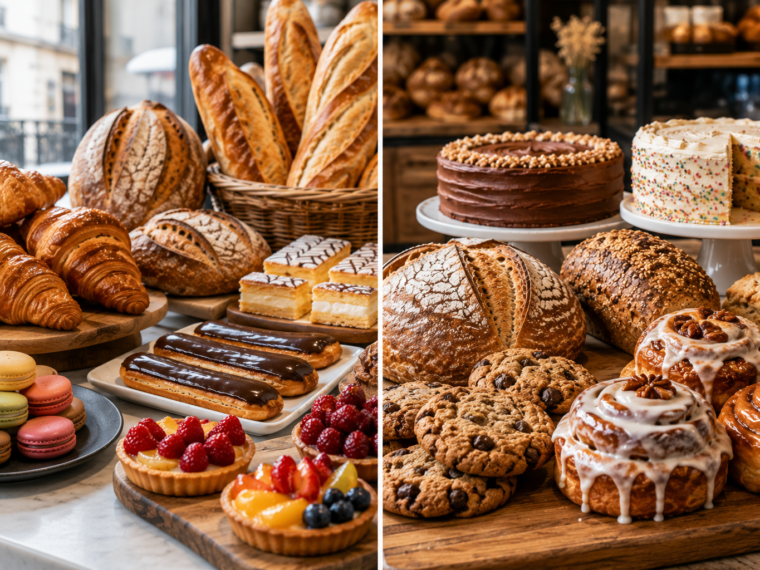
Walk into a bakery in Paris and then step into one in the United States, and you’ll immediately notice differences. Yet both share the same goal: creating delicious baked goods that bring people together. French and American bakeries have influenced each other for decades, but each retains a unique identity shaped by history, culture, and consumer preferences. Understanding these differences offers a fascinating glimpse into the world of baking.
One of the biggest distinctions lies in the role bread plays in everyday life. In France, bread is often considered an essential daily staple. Fresh baguettes, country loaves, and traditional breads are purchased regularly and consumed alongside meals throughout the day. French bakeries place enormous emphasis on bread quality, fermentation, and crust development. In the United States, while artisan bread has become increasingly popular, bakeries often offer a broader variety of products, including cakes, cookies, donuts, pastries, and specialty desserts. Bread remains important, but it typically shares the spotlight with many other baked goods.
Pastry culture also differs significantly. French bakeries are known for their precision and refinement. Croissants, pain au chocolat, éclairs, mille-feuille, fruit tarts, and macarons are often crafted using techniques that require years of training to master. Presentation is elegant and carefully controlled. American bakeries, on the other hand, often embrace creativity, abundance, and customization. Larger portions, bold flavors, colorful decorations, and inventive combinations are common. While French pastries focus on balance and technique, American pastries frequently celebrate originality and indulgence.
Customer expectations help shape these differences as well. In France, bakery visits are often part of a daily routine. People may stop by each morning to purchase fresh bread or pastries. The emphasis is often on freshness and consistency. In the United States, bakeries frequently serve as destinations where customers linger over coffee, meet friends, or explore seasonal offerings. Many modern American bakeries combine elements of cafés, restaurants, and retail spaces to create a broader experience.
Ingredient philosophy offers another interesting contrast. French baking traditions often prioritize simplicity and technique. A classic croissant, for example, relies on butter, flour, yeast, and time rather than elaborate additions. The quality of each ingredient is expected to shine through. American bakers frequently build upon these foundations with creative flavors, fillings, toppings, and local ingredients. This willingness to experiment has helped create a bakery culture that constantly evolves while drawing inspiration from international traditions.
The design and atmosphere of bakeries also reflect cultural differences. Traditional French bakeries tend to be compact, focused, and product-centered. Customers often enter with a specific purchase in mind. American bakeries frequently emphasize seating areas, open kitchens, and visually striking displays designed to encourage longer visits and social interaction.
Despite these differences, the gap between French and American bakeries continues to narrow. French techniques are increasingly embraced by American bakers, while French professionals often incorporate modern trends and international influences into their work. The result is a vibrant exchange of ideas that benefits bakery lovers everywhere.
Ultimately, neither style is better than the other. French bakeries excel in tradition, precision, and craftsmanship, while American bakeries thrive through creativity, variety, and innovation. Together, they demonstrate the incredible diversity of baking culture and the universal appeal of fresh bread and pastries.