
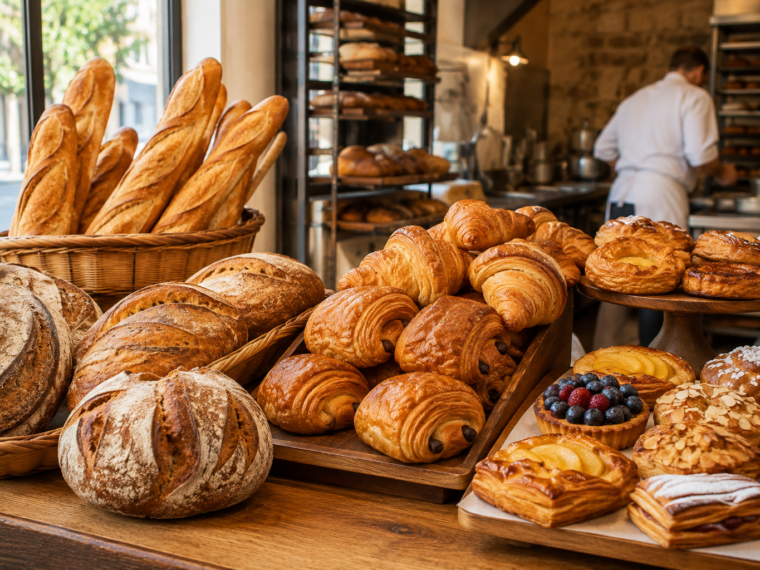
French bakeries hold a special place in the world of baking. From the aroma of freshly baked bread to the delicate layers of buttery pastries, they have inspired bakers and food lovers across generations. Whether you are strolling through a neighborhood bakery or experimenting with dough at home, French baking offers a timeless combination of craftsmanship, tradition, and flavor.
At the heart of every French bakery is bread. The baguette remains one of the most recognizable symbols of French cuisine. Its crisp crust and airy interior make it a staple that pairs beautifully with butter, cheese, or simple meals. Alongside the baguette, breads such as pain de campagne and brioche showcase the diversity of French baking. While rustic country loaves emphasize texture and depth of flavor, brioche brings richness and softness thanks to its generous use of butter and eggs.
French bakeries are equally celebrated for their pastries. The croissant is perhaps the most famous example, loved for its flaky layers and delicate texture. Creating a great croissant requires patience, precision, and a process known as lamination, where layers of butter are folded into dough repeatedly. The result is a pastry that feels light yet indulgent. Other favorites include pain au chocolat, filled with rich chocolate, and almond croissants, which transform classic pastries into something even more decadent.
Beyond the well-known classics, French pastry culture embraces creativity while respecting tradition. Fruit tarts, éclairs, mille-feuille, and madeleines each offer unique textures and flavors. Seasonal ingredients often play an important role, allowing bakeries to highlight fresh berries, stone fruits, or citrus throughout the year. This balance between tradition and innovation is one reason French bakeries continue to influence modern baking around the world.
For home bakers, French baking provides both inspiration and valuable lessons. Many iconic recipes focus on mastering a few simple ingredients rather than relying on complicated techniques or decorations. Flour, butter, yeast, eggs, and time become the foundation for remarkable results. Learning to make a baguette or croissant at home can be challenging, but it also offers a rewarding appreciation for the skill involved in professional baking.
French bakeries have also shaped bakery culture in the United States. Artisan bakeries across the country draw inspiration from French methods, emphasizing slow fermentation, high-quality ingredients, and handcrafted products. As consumers increasingly seek authentic flavors and traditional baking techniques, French-inspired breads and pastries remain as popular as ever.
The enduring appeal of French bakeries lies in their ability to turn everyday ingredients into memorable experiences. A warm baguette shared at dinner, a buttery croissant enjoyed with coffee, or a beautifully crafted tart served for dessert all reflect a baking tradition that values quality and care. For bakery lovers, home bakers, and food enthusiasts alike, French breads and pastries continue to represent some of the finest examples of the baking craft.