
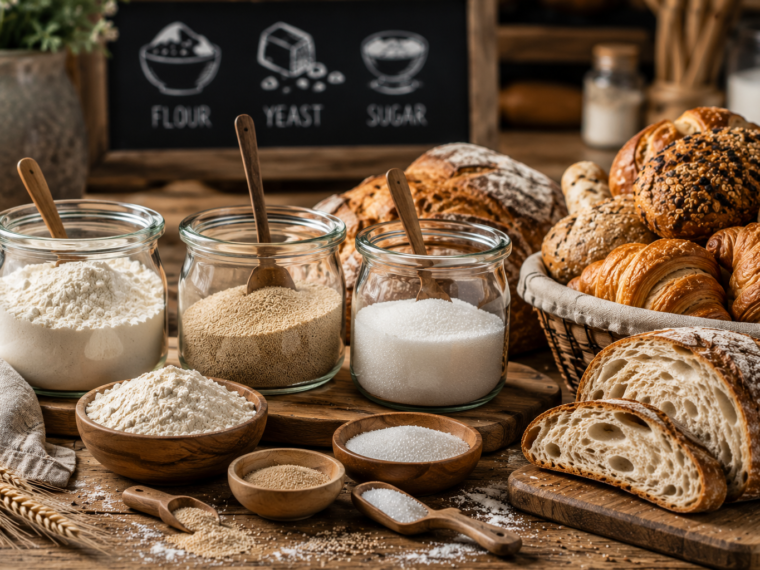
Every loaf of bread, batch of cookies, or beautifully baked cake begins with a handful of essential ingredients. While baking can sometimes seem complex, understanding the role of a few key components can make the process far more approachable. Among the most important ingredients are flour, yeast, and sugar. Together, they form the foundation of countless baked goods enjoyed around the world.
For home bakers and food enthusiasts, learning how these ingredients work is one of the best ways to improve baking results. Each ingredient serves a unique purpose, influencing everything from texture and flavor to appearance and shelf life. Once you understand the basics, recipes become easier to follow and adapt with confidence.
Flour is often considered the backbone of baking. It provides structure and forms the framework that holds baked goods together. Different types of flour contain varying amounts of protein, which directly affects texture. Bread flour, for example, contains more protein and helps create chewy, elastic doughs. All-purpose flour offers versatility and works well in a wide range of recipes, while cake flour produces lighter, more delicate textures. When flour is mixed with liquid, proteins form gluten, creating the network that gives bread its strength and helps baked goods maintain their shape.
Yeast plays an equally important role in many bread recipes. This living microorganism consumes sugars and produces carbon dioxide gas, causing dough to rise. The fermentation process not only creates volume but also contributes to flavor development. A slowly fermented dough often develops deeper, more complex flavors than one that rises quickly. Yeast requires the right conditions to thrive, including moisture, warmth, and time. Understanding how yeast works allows bakers to better manage proofing, fermentation, and overall dough performance.
Sugar is often associated with sweetness, but its role in baking extends far beyond flavor. In breads and pastries, sugar provides food for yeast during fermentation. In cakes and cookies, it contributes to moisture retention, tenderness, and browning. Sugar also helps create appealing textures by influencing how ingredients interact during baking. Even recipes that are not particularly sweet often contain some sugar because of the functional benefits it provides.
These three ingredients frequently work together to create balanced results. In bread making, flour provides structure, yeast creates lift, and sugar supports fermentation while enhancing flavor. In pastries and desserts, flour creates stability, while sugar contributes sweetness and texture. Understanding these relationships helps bakers recognize why recipes are written the way they are and how small adjustments can affect the final product.
Ingredient quality also matters. Professional bakers often emphasize consistency because even slight differences in flour composition, yeast activity, or sugar type can influence results. Choosing fresh ingredients and storing them properly helps ensure reliable baking performance. While premium ingredients can sometimes improve flavor, understanding technique remains equally important.
As baking grows in popularity, many home bakers are becoming increasingly interested in the science behind their favorite recipes. Learning about foundational ingredients helps remove much of the mystery from the process. Rather than simply following instructions, bakers gain the ability to understand why recipes work and how to troubleshoot common challenges.
Flour, yeast, and sugar may seem simple, but they are the building blocks of countless baked creations. By understanding their individual roles and how they work together, bakers can develop greater confidence in the kitchen and enjoy more consistent, satisfying results. Whether you’re making artisan bread, flaky pastries, or homemade desserts, mastering these basics is an important step toward becoming a better baker.