
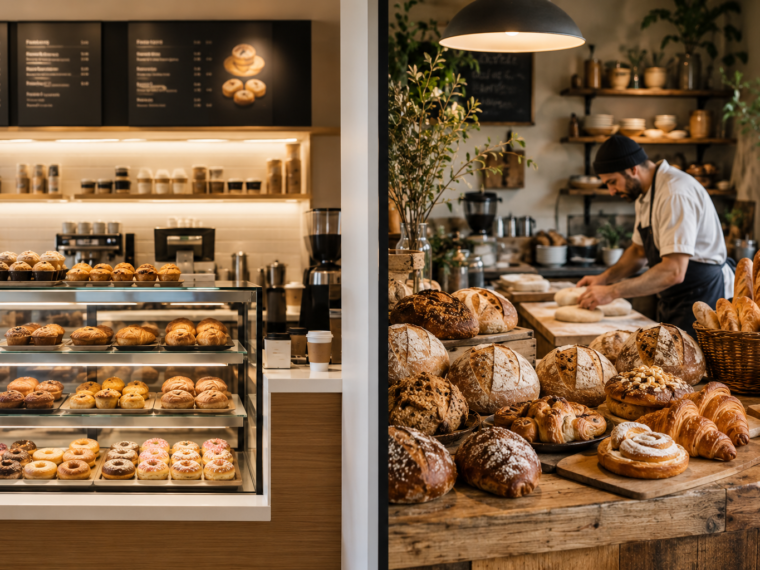
Walk into a bakery chain and you usually know exactly what to expect. The pastries look familiar, the menu rarely changes, and the experience feels consistent from one location to another. Independent bakeries, on the other hand, often feel personal, creative, and deeply connected to the local community. Both styles have loyal fans, but they offer very different experiences for people who love baked goods.
Bakery chains have become popular across the United States because they focus on convenience and consistency. Customers appreciate being able to grab the same coffee and pastry whether they are traveling, commuting, or stopping by during a busy morning. Large-scale operations also allow chains to offer standardized recipes, efficient service, and products that are available throughout the day. For many people, this reliability is comforting. There is familiarity in knowing exactly how a croissant or cinnamon roll will taste every time.
At the same time, independent bakeries have built a strong following by offering something chains often struggle to replicate: individuality. Small bakeries tend to experiment more with flavors, seasonal ingredients, and handcrafted techniques. The atmosphere usually feels more intimate, and customers often connect directly with the people who actually bake the bread or pastries. That human connection matters. Many bakery lovers enjoy hearing the story behind a recipe, discovering limited seasonal creations, or simply feeling part of a neighborhood food culture.
The differences also become noticeable in the baking process itself. Independent bakeries are more likely to focus on small-batch production, naturally fermented bread, or pastries prepared fresh throughout the day. Because production volumes are smaller, there is often more flexibility and creativity in the menu. Bakery chains, meanwhile, prioritize operational efficiency. This can mean centralized production systems, streamlined recipes, and faster preparation methods designed to support multiple locations.
Price and accessibility are another part of the conversation. Bakery chains are often easier to find and may provide more affordable options for everyday customers. Independent bakeries sometimes operate with higher ingredient costs and smaller production capacities, which can affect pricing. However, many customers are willing to pay more for products that feel handmade, locally inspired, or produced with premium ingredients.
Interestingly, the line between bakery chains and independent bakeries has started to blur in recent years. Some larger bakeries now focus more on artisan-style baking, while many small bakeries use modern branding and digital ordering systems to compete more effectively. Social media has also changed how customers discover bakeries. Beautiful pastries, behind-the-scenes baking videos, and visually appealing café spaces help independent bakeries attract attention beyond their immediate neighborhood.
In the end, there is no single “better” choice. Bakery chains offer convenience, familiarity, and speed, while independent bakeries often provide creativity, craftsmanship, and a stronger sense of community. Both play an important role in American food culture, and both continue to evolve as customer expectations change. For bakery lovers, the real joy comes from exploring different styles, appreciating different approaches, and enjoying the simple comfort of fresh baked goods wherever they are found.