
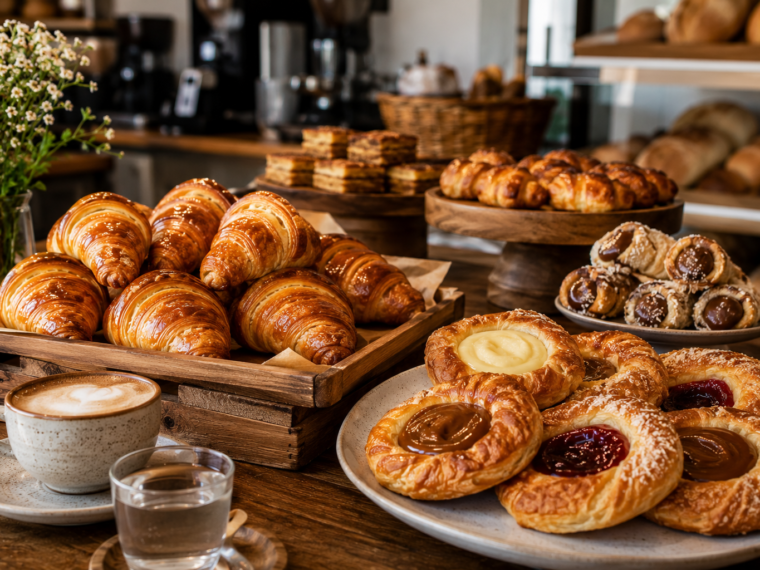
Few bakery cultures feel as warm and inviting as the one found in Argentina. Walk into a traditional bakery in Buenos Aires early in the morning, and the smell of buttery pastries, fresh bread, and sweet fillings instantly fills the air. Argentine baking combines European influence with local traditions, creating a pastry culture that feels both familiar and unique.
One of the country’s most iconic pastries is the medialuna. Often compared to a croissant, the medialuna has its own personality and texture. It is typically smaller, softer, and sweeter than its French counterpart, with a shiny glaze that gives it a delicate sweetness. In Argentina, medialunas are part of everyday life. They are commonly enjoyed during breakfast or afternoon coffee breaks alongside espresso or mate. Some bakeries prepare buttery “medialunas de manteca,” while others offer lighter versions made with lard, known as “medialunas de grasa.” Both styles remain deeply loved across the country.
Argentine bakeries are also known for their impressive variety of pastries and baked sweets. Display cases are often filled with pastelitos, facturas, vigilantes, cañoncitos, and dulce de leche-filled pastries. Dulce de leche plays an especially important role in Argentine desserts. This rich caramel-like spread appears in cakes, sandwich cookies, pastries, and filled croissants. Its smooth texture and deep sweetness have become one of the defining flavors of Argentine baking culture.
European immigration strongly shaped Argentina’s bakery traditions, especially influences from Spain and Italy. Over time, bakers adapted these techniques and ingredients to local tastes, creating pastries that feel more relaxed, comforting, and approachable. Unlike some highly decorative pastry cultures, Argentine baking often focuses on generosity and everyday enjoyment. The pastries are designed to be shared at family tables, cafés, and neighborhood gatherings rather than reserved only for special occasions.
Another distinctive aspect of Argentine bakery culture is the social atmosphere surrounding it. Bakeries are not simply places to buy bread. They are part of daily routines and local identity. Families stop by on weekends to pick up pastries for breakfast, coworkers share facturas during office breaks, and cafés fill with people enjoying coffee and conversation. Food and community remain closely connected through these traditions.
In recent years, Argentine pastries have gained more attention internationally as global interest in regional baking continues to grow. Artisan bakeries in the United States and Europe are beginning to introduce medialunas and dulce de leche desserts to new audiences. Home bakers are also exploring Argentine recipes because they offer comforting flavors without overly complicated techniques. The balance of buttery dough, soft textures, and rich fillings makes these pastries especially appealing.
What makes Argentine baking so memorable is its warmth. Every pastry feels connected to everyday life, conversation, and simple moments of enjoyment. Whether it is a freshly glazed medialuna enjoyed with coffee or a dulce de leche pastry shared among friends, Argentine bakery culture celebrates comfort and togetherness in a way that feels timeless.