
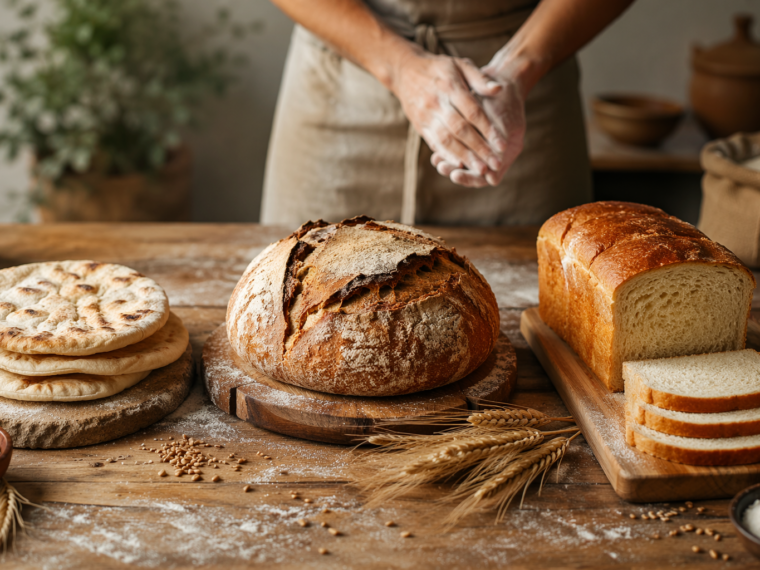
Few foods are as universal as bread. Found in nearly every culture, it has nourished humanity for thousands of years. From simple mixtures of crushed grains and water to the artisanal loaves we enjoy today, bread tells a story of survival, innovation, and creativity.
The earliest forms of bread date back over 10,000 years. Ancient civilizations, including the Egyptians, are often credited with transforming bread-making by discovering fermentation. This accidental breakthrough led to the first leavened breads, lighter and more flavorful than the flatbreads that came before. In many ways, bread became more than food—it became a symbol of life and prosperity.
As societies evolved, so did bread. In ancient Rome, baking became a specialized craft, and public bakeries appeared in cities. Techniques improved, ovens became more advanced, and bread started to reflect social status. Fine white bread was reserved for the wealthy, while darker, denser loaves were more common among the working class. Across the world, different cultures developed their own traditions, from sourdough in Europe to pita in the Middle East and naan in South Asia.
The Industrial Revolution marked a turning point. With the invention of machines and refined flour production, bread became more accessible and consistent. Sliced bread, introduced in the early 20th century, revolutionized convenience and quickly became a staple in American households. However, this era also led to a shift away from traditional methods, favoring speed and efficiency over craftsmanship and flavor.
In recent decades, there has been a renewed appreciation for traditional baking. Artisan bakeries and home bakers alike are rediscovering ancient techniques, natural fermentation, and high-quality ingredients. Sourdough, once a necessity, has become a symbol of authenticity and skill. People are seeking bread that not only tastes better but also connects them to a deeper history.
Today, bread continues to evolve. It reflects modern values—health, sustainability, and creativity—while staying rooted in its ancient origins. Whether it’s a rustic loaf from a local bakery or a homemade creation fresh out of the oven, bread remains a timeless expression of culture and care.
Bread is more than a simple staple. It’s a living tradition, shaped by generations and shared across the world. And as long as people continue to bake, experiment, and gather around the table, its story will keep rising.