
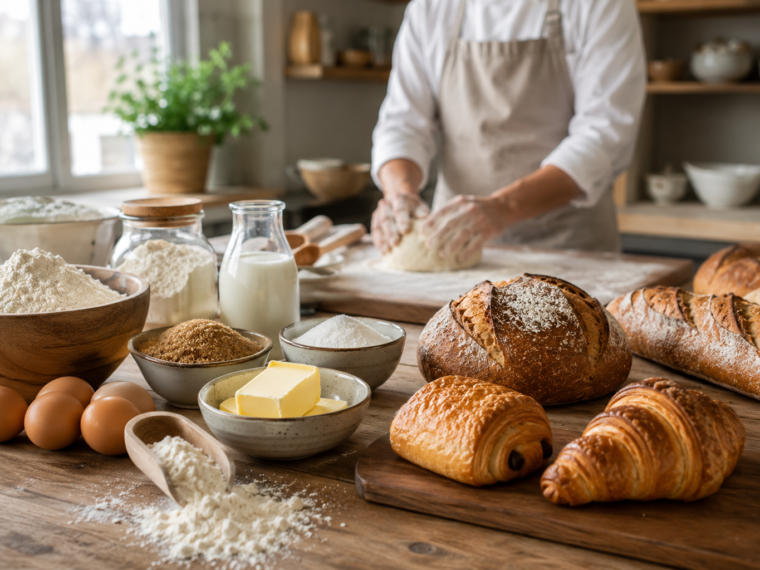
A great pastry is never just about technique. Behind every flaky croissant, soft sandwich loaf, or rich chocolate cake is a careful balance of ingredients working together. In baking, even small changes can completely transform flavor, texture, and appearance. That’s what makes the craft so fascinating for both professional bakers and home enthusiasts.
Flour is one of the most important building blocks in baking, and different types create very different results. Bread flour contains more protein, which helps form stronger gluten and creates a chewy texture ideal for artisan breads and pizza dough. Cake flour, on the other hand, has a lower protein content, producing softer and lighter baked goods. Whole grain flours add deeper flavor and heartier texture, while alternative flours like almond or oat bring new dimensions to modern recipes. The choice of flour often determines whether a product feels airy, dense, crisp, or tender.
Fat also plays a major role in both flavor and texture. Butter remains a favorite in bakeries because of its rich taste and ability to create flaky layers in pastries. In cookies and cakes, butter contributes softness and depth that many bakers consider essential. Oils can create moist textures and longer shelf life, while shortening may improve structure in certain recipes. Even the temperature of the fat matters. Cold butter creates steam pockets for laminated doughs, while softened butter blends differently into batters and doughs. Small adjustments can dramatically change the final product.
Sweeteners do much more than add sweetness. Sugar affects browning, moisture retention, and texture development. Brown sugar creates softer cookies because of its molasses content, while white sugar often produces crispness and lighter flavor. Honey, maple syrup, and other natural sweeteners introduce subtle flavor notes and additional moisture. In bread baking, small amounts of sugar can also support yeast activity and improve color during baking. Understanding how sweeteners behave helps bakers create products that feel balanced rather than overly sweet.
Another key ingredient is dairy. Milk, cream, yogurt, and buttermilk all contribute richness and tenderness while influencing flavor complexity. Buttermilk adds a slight tang that enhances cakes and biscuits, while cream creates luxurious textures in pastries and fillings. Eggs are equally important because they provide structure, moisture, color, and stability. They help cakes rise, enrich doughs, and create smooth textures in custards and brioche. In many recipes, removing or replacing eggs requires careful reformulation to maintain the desired consistency.
Today’s bakery industry is also seeing more interest in premium and locally sourced ingredients. Customers appreciate high-quality chocolate, fresh fruit, heritage grains, and natural flavorings. These ingredients often create more distinctive products and allow bakeries to stand out in a competitive market. At the same time, many bakers are experimenting with plant-based alternatives and cleaner ingredient lists without sacrificing taste.
What makes baking so rewarding is the relationship between ingredients and creativity. A simple adjustment in flour, butter, sugar, or dairy can completely change the eating experience. For bakery lovers, understanding these details adds a deeper appreciation for every loaf, tart, cookie, or pastry. Great baking is not only about following recipes — it is about knowing how ingredients shape the flavor, texture, and personality of every bite.