
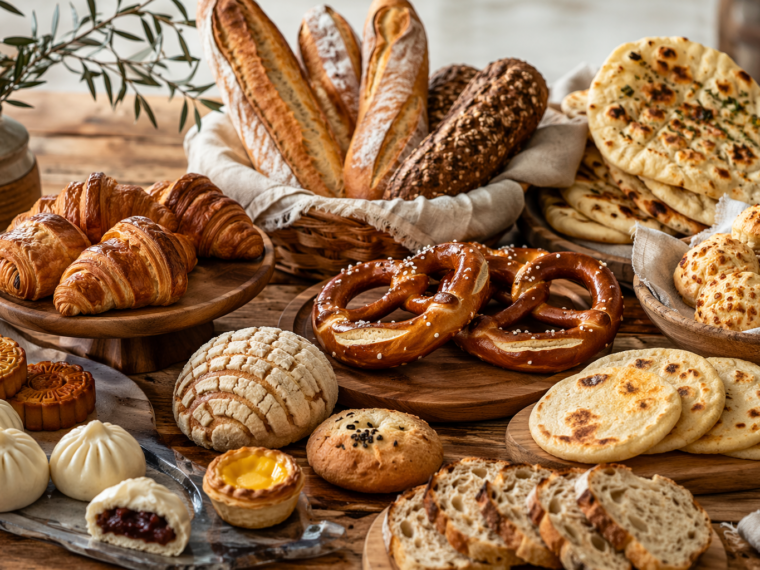
Baking is one of the oldest culinary traditions in human history. Across continents and cultures, it has shaped daily life, celebrations, and family rituals. From rustic village ovens to modern kitchens, traditional baking tells stories of heritage, ingredients, and craftsmanship passed down through generations.
In Europe, baking is deeply rooted in regional identity. France is known for its crisp baguettes and buttery croissants, crafted with precision and patience. In Italy, focaccia and ciabatta reflect a simpler approach, highlighting high-quality olive oil and slow fermentation. Meanwhile, Germany offers a rich diversity of breads, from dense rye loaves to soft pretzels, often made using techniques refined over centuries. Each country brings its own rhythm to baking, blending technique with tradition.
Traveling east, the Middle East and Central Asia reveal a different style of baking, often centered around communal ovens. Flatbreads like pita, naan, and lavash are staples, baked quickly at high heat and shared among families. These breads are not just food—they are part of daily rituals. The use of clay ovens, such as the tandoor, creates unique textures and flavors that are difficult to replicate at home but deeply inspiring for modern bakers.
In Asia, traditional baking varies widely. Japan combines precision and artistry, creating soft milk bread and delicate pastries influenced by both local and European traditions. In China, steamed buns and baked goods coexist, offering a contrast in texture and technique. Southeast Asia introduces tropical flavors into baking, using ingredients like coconut, pandan, and banana to create desserts that are both vibrant and comforting.
Across the Americas, baking traditions reflect a blend of indigenous ingredients and global influences. In Mexico, pan dulce adds color and sweetness to everyday life, while in the United States, classic recipes like cornbread, pies, and biscuits carry a sense of nostalgia and regional pride. South America contributes its own specialties, such as Brazilian pão de queijo, made with cassava flour and cheese, offering a naturally gluten-free alternative with a chewy texture.
What connects all these traditions is more than just flour and heat. It’s the human element—the care, the repetition, and the joy of sharing something homemade. Traditional baking reminds us that great recipes are not only about ingredients but also about time, memory, and culture.
As home bakers today, exploring these traditions opens the door to new techniques and flavors. It encourages creativity while honoring the roots of baking. Whether you try baking a rustic European loaf or experimenting with global ingredients, each recipe becomes a small journey across the world.