
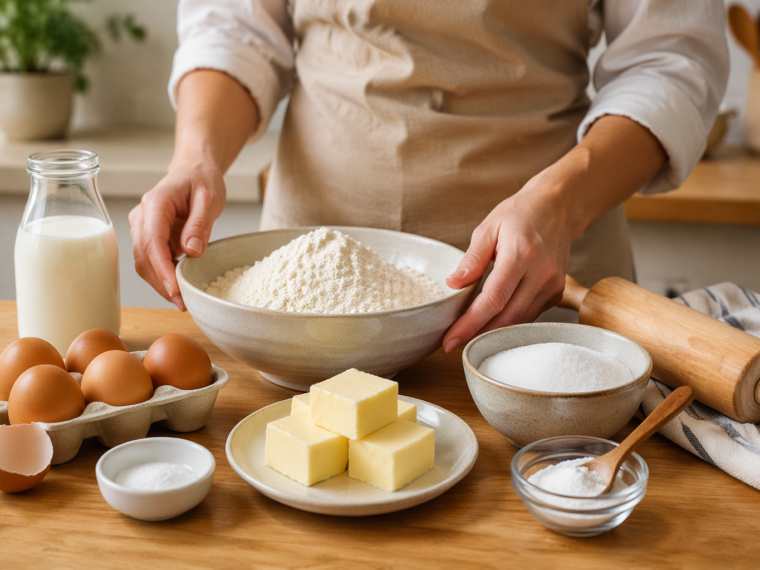
Baking may feel like magic, but it all starts with a handful of simple ingredients. Behind every golden loaf, flaky pastry, or soft cookie is a careful balance of essentials working together. Understanding these core components is what turns a good baker into a confident one.
Flour is the foundation of most baked goods. It provides structure and shape, thanks to the proteins that form gluten when mixed with liquid. Different types of flour bring different results. All-purpose flour is versatile, while bread flour creates chewier textures and cake flour leads to lighter, softer crumbs. Choosing the right flour can completely change the outcome of your recipe.
Next comes sugar, which does much more than add sweetness. It helps retain moisture, contributes to browning, and enhances flavor. White sugar gives clean sweetness, while brown sugar adds depth and a hint of caramel. In some recipes, sugar also plays a key role in texture, creating crisp edges or soft centers depending on how it’s used.
Fats, such as butter or oil, bring richness and tenderness. Butter is especially loved for its flavor and ability to create flaky layers in pastries. Oil, on the other hand, tends to produce a more moist and uniform crumb. The choice between them often depends on the desired texture and taste of the final product.
Eggs act as binders and stabilizers. They hold ingredients together while adding moisture and structure. In cakes and pastries, eggs also contribute to color and lightness. When whipped, they can trap air and help create a delicate, airy texture. This is why they are essential in recipes like sponge cakes and meringues.
Leavening agents are what make baked goods rise. Baking powder and baking soda release gases that create air pockets, giving bread, cakes, and muffins their light and fluffy texture. Yeast works differently, fermenting sugars over time to produce carbon dioxide. This process not only helps dough rise but also develops complex flavors, especially in artisan bread.
Liquids, such as milk or water, bring everything together. They hydrate the flour, activate gluten, and dissolve ingredients like sugar and salt. Milk adds richness and a subtle sweetness, while water keeps things simple and clean. Even small changes in liquid can affect texture and consistency.
Finally, salt might seem minor, but it plays a crucial role. It enhances flavors, balances sweetness, and strengthens gluten structure. Without it, baked goods can taste flat and lack depth.
Mastering baking doesn’t require complicated techniques. It starts with understanding these essential ingredients and how they interact. Once you know their roles, you can adapt recipes, experiment with confidence, and truly make each creation your own. Baking becomes less about following rules and more about creating something personal and delicious.