
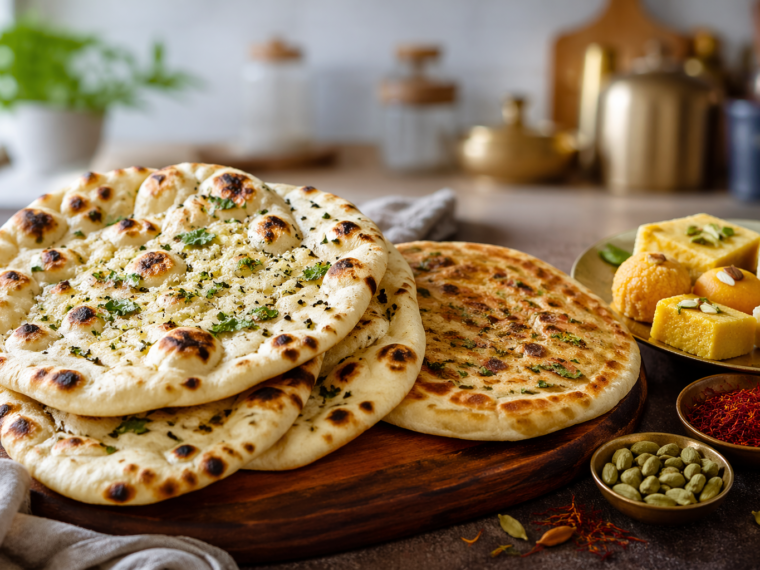
Indian baking is a world of warmth, texture, and deeply rooted tradition. While many people associate Indian cuisine with stovetop cooking, its baked goods tell an equally rich story—one shaped by clay ovens, regional flavors, and generations of craftsmanship. From pillowy flatbreads to delicate sweets, Indian baking invites you into a sensory experience that feels both comforting and exciting.
At the heart of Indian baking is the iconic naan. Soft, slightly chewy, and often blistered with char from a traditional tandoor oven, naan is more than just bread—it’s a centerpiece. Brushed with butter or garlic, it pairs beautifully with curries or stands on its own as a satisfying bite. For home bakers, recreating naan in a conventional oven or cast-iron skillet is surprisingly achievable. The key lies in high heat and a well-hydrated dough, which creates that signature airy texture.
Closely related but distinct is kulcha, a lesser-known gem that deserves more attention. Kulcha is typically softer and slightly richer than naan, often stuffed with fillings like spiced potatoes, paneer, or herbs. Originating from Northern India, especially Punjab, it’s traditionally baked in a tandoor and served with chickpea curry. What makes kulcha special is its versatility—it can be both a hearty meal and a comforting snack. For American home bakers, it’s a creative way to explore filled breads without needing complex techniques.
Beyond savory breads, Indian baking shines in its sweet offerings. Bakeries across India display an array of treats influenced by local ingredients and colonial-era techniques. Cardamom-infused cakes, coconut cookies, and buttery biscuits reflect a blend of Indian flavors with European baking styles. One standout is the simple yet irresistible rusk—a twice-baked bread similar to biscotti, perfect for dipping into chai. These sweets are often less sugary than their Western counterparts, allowing spices like saffron, rose, and cardamom to take center stage.
What makes Indian baking especially appealing today is its adaptability. You don’t need a traditional clay oven to get started. With a hot oven, a baking stone, or even a stovetop pan, you can bring these recipes into your own kitchen. Ingredients are increasingly accessible in U.S. grocery stores, and the techniques are approachable for both beginners and experienced bakers looking to expand their repertoire.
Exploring Indian baking is not just about trying new recipes—it’s about embracing a different rhythm of cooking, one that values patience, flavor layering, and cultural connection. Whether you’re pulling a golden naan from your oven or enjoying a fragrant cardamom cookie with tea, each bite offers a glimpse into a rich culinary heritage that continues to evolve.