
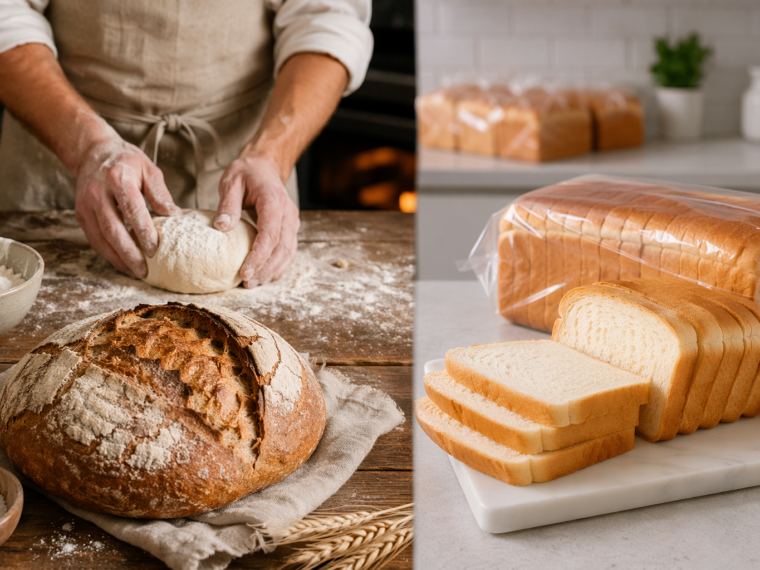
Walk into any bakery or grocery store, and you’ll face a quiet but meaningful choice: artisan bread or industrial bread. At first glance, it may seem like a matter of taste or price. But behind that choice lies a deeper story about tradition, time, and the way we connect with food.
Artisan bread is rooted in craftsmanship. It is often made in small batches, using simple ingredients like flour, water, salt, and natural yeast. The process takes time—sometimes many hours or even days. This slow fermentation develops complex flavors, a rich aroma, and a texture that feels alive. Each loaf is slightly different, shaped by the hands of the baker and the conditions of the day. For many, artisan bread is not just food—it’s an experience.
On the other side, industrial bread is built for efficiency. Produced on a large scale, it relies on standardized processes and often includes additives to improve shelf life, texture, and consistency. The goal is simple: make bread quickly, keep it soft for longer, and ensure it tastes the same every time. For busy households, this convenience can be essential. Industrial bread is accessible, affordable, and widely available, making it a staple in many kitchens.
But the debate goes beyond ingredients and production methods. It touches on how we value food. Artisan bread encourages us to slow down, to appreciate the effort behind each loaf, and to reconnect with traditional baking methods. Industrial bread reflects modern life—fast-paced, practical, and focused on convenience. Neither is inherently “wrong,” but they serve very different purposes.
There is also a growing awareness around nutrition and digestion. Many people find that naturally fermented artisan bread is easier to digest and more satisfying. The longer fermentation process can break down certain components in the flour, making the bread feel lighter despite its hearty texture. Industrial bread, while soft and easy to eat, may lack that depth both in flavor and in nutritional complexity.
In the end, the real debate isn’t about choosing one over the other. It’s about understanding what you value in your daily life. Some days call for convenience, others for quality and connection. The beauty of today’s food culture is that we don’t have to choose just one path. We can enjoy both, depending on the moment, the mood, and the meaning we want to bring to our table.