
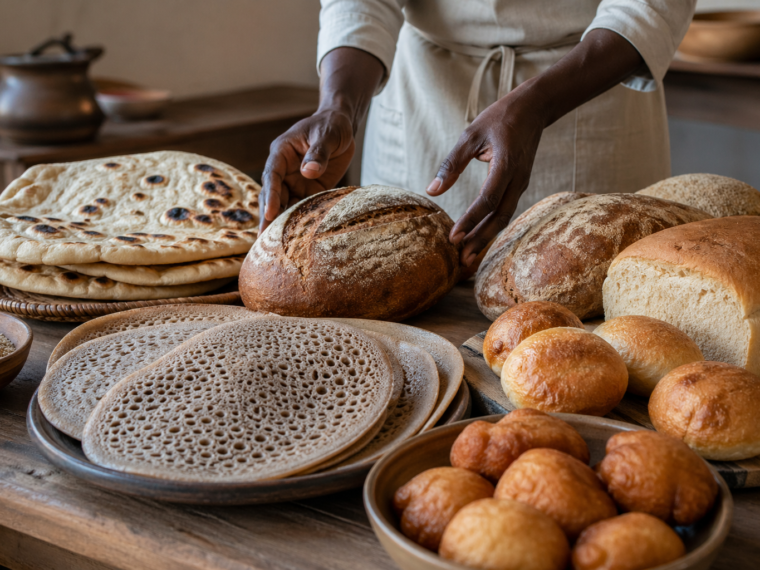
Africa’s bakery traditions tell a story far richer than most people expect. Across a vast and diverse continent, bread is not just a staple—it’s a reflection of culture, climate, and history. From soft flatbreads to fried doughs and fermented specialties, African baking offers a wide range of textures and flavors that continue to inspire both local communities and curious bakers around the world.
In North Africa, bread is deeply woven into daily life. Countries like Morocco, Tunisia, and Egypt rely heavily on round, rustic loaves baked in communal ovens. These breads are often slightly dense, with a golden crust and a soft interior, perfect for scooping up stews and sauces. Semolina flour is commonly used, giving the bread a subtle sweetness and a distinctive texture. Baking here is practical and communal, shaped by tradition and shared spaces.
Moving west, the diversity expands even further. In countries such as Nigeria and Ghana, bread often takes on a sweeter, softer profile influenced by colonial history. Loaves are typically fluffy, slightly enriched, and perfect for breakfast or street food. Alongside these, you’ll find fried dough creations that are crisp on the outside and tender inside. These treats are quick to prepare and deeply rooted in everyday life, offering both comfort and convenience.
In East Africa, fermentation plays a central role. Ethiopia and Eritrea are known for injera, a spongy, sour flatbread made from teff flour. It serves as both plate and utensil, absorbing flavors from richly spiced dishes. The baking process here is unique, relying on natural fermentation that develops over several days. The result is a bread with a tangy flavor and airy texture that stands apart from more conventional loaves.
Southern Africa brings yet another perspective. Here, bread often reflects a mix of indigenous practices and European influence. You’ll find everything from simple, hearty loaves to soft rolls and baked goods prepared for gatherings and celebrations. In rural areas, bread is sometimes cooked over open flames or in cast-iron pots, creating a rustic crust and a smoky aroma that adds depth to the final product.
What makes African bakery traditions so compelling is their adaptability. Ingredients vary widely depending on the region—cassava, millet, sorghum, and maize often replace wheat, leading to entirely different textures and flavors. Baking methods also shift based on available tools, from clay ovens to open fires. This flexibility has allowed these traditions to evolve while staying deeply connected to their roots.
For home bakers and food enthusiasts in the United States, exploring African breads offers a chance to step outside familiar techniques. It encourages experimentation with fermentation, alternative flours, and new flavor profiles. More importantly, it highlights how bread can be both simple and deeply meaningful, shaped by the people and places behind it.
Conclusion
African bakery traditions are a celebration of diversity, resilience, and creativity. Each region brings its own identity to bread-making, resulting in a rich tapestry of flavor and techniques. For anyone passionate about baking, it’s an invitation to explore, learn, and appreciate a world of bread that goes far beyond the ordinary.